Mathematics Meets Tradition

Arvind Singh
| 27-11-2025

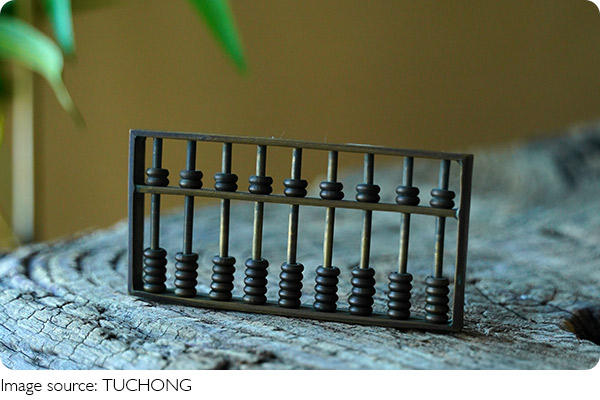
The abacus, an ancient and wise calculating tool, embodies humanity's exploration of numbers and computation.
It has independently developed in multiple cultures, becoming an essential part of human civilization.
Its construction, function, and historical significance showcase human creativity in problem-solving and enhancing productivity.
The basic structure of the abacus consists of a rectangular frame, several parallel rods, and beads that slide along the rods. Each rod represents a digit, such as units, tens, hundreds, etc., while the number and position of the beads indicate specific values. This design allows the abacus to visually and intuitively represent numbers, making the calculation process clearer and more efficient.
Discover the Wonders of Herb Robert: A Flower Lovers Delight in Every Way!
Dandelions are like pom-poms, adding cheer to life with their charm, benefits, and importance to wildlife.
Creating potted plants brings joy, creativity, and a touch of nature into our lives!
With sunshine, good soil, and care, rosemary thrives, bringing delightful aroma and flavor to life!
Discover the joy of caring for succulents and watch your green companions thrive beautifully!
Anemones dazzle with vibrant colors and graceful forms, blending beauty with nature's fascinating stories!
The operation of the abacus is relatively simple, involving the movement of beads to perform basic arithmetic operations like addition, subtraction, multiplication, and division. Once users master the skills of using the abacus, they can perform complex calculations in a remarkably short time, a highly valuable skill in ancient times.
Historically, the abacus played an important role in many regions. In ancient times, merchants, scholars, and craftsmen often relied on the abacus for transactions, measurements, and record-keeping. Its use extended beyond simple everyday transactions, assisting in many complex calculations such as those in taxation, engineering, and astronomy.
For instance, in certain cultures, the abacus was not only used in commerce but was also incorporated into educational systems as a tool for teaching students about numbers and calculations. This established the abacus not just as a tool but as an important medium for knowledge transmission.
Despite the rapid development of modern technology, which has gradually replaced traditional abacuses with electronic calculators and computers, the abacus still retains its unique status and value. In some regions, the abacus remains an indispensable tool in daily life. Moreover, learning and using the abacus positively impact concentration and hand-eye coordination, with many studies indicating that it promotes overall brain development.
In the context of globalization, the abacus has begun to emerge from its traditional usage, becoming a bridge for cultural exchange. The abacus cultures of various countries collide and merge, creating a rich tapestry of abacus art and educational forms.
Through learning the abacus, individuals not only master calculation skills but also gain a deeper understanding and appreciation of the mathematical wisdom of other cultures. This cross-cultural exchange elevates the abacus beyond a mere tool, transforming it into an important carrier of cultural heritage and innovation.
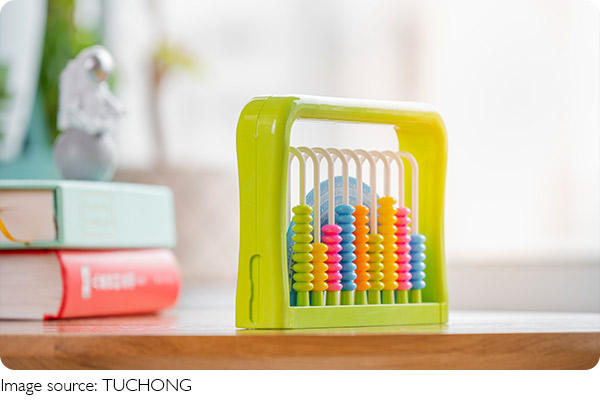
In summary, the abacus is not just a calculating tool but a symbol of human wisdom and culture. Its simple structure is imbued with deep meaning, and its flexible yet efficient operation has made outstanding contributions to humanity's calculation, education, and cultural exchange throughout history.
Even in today's rapidly advancing technological landscape, the abacus continues to thrive in certain fields, allowing us to gain a deeper understanding of the mysteries of numbers and the developmental history of human civilization. Whether in the past or the present, the abacus reminds us of the importance of wisdom and computational ability, as well as their irreplaceable roles in driving the progress of human society.